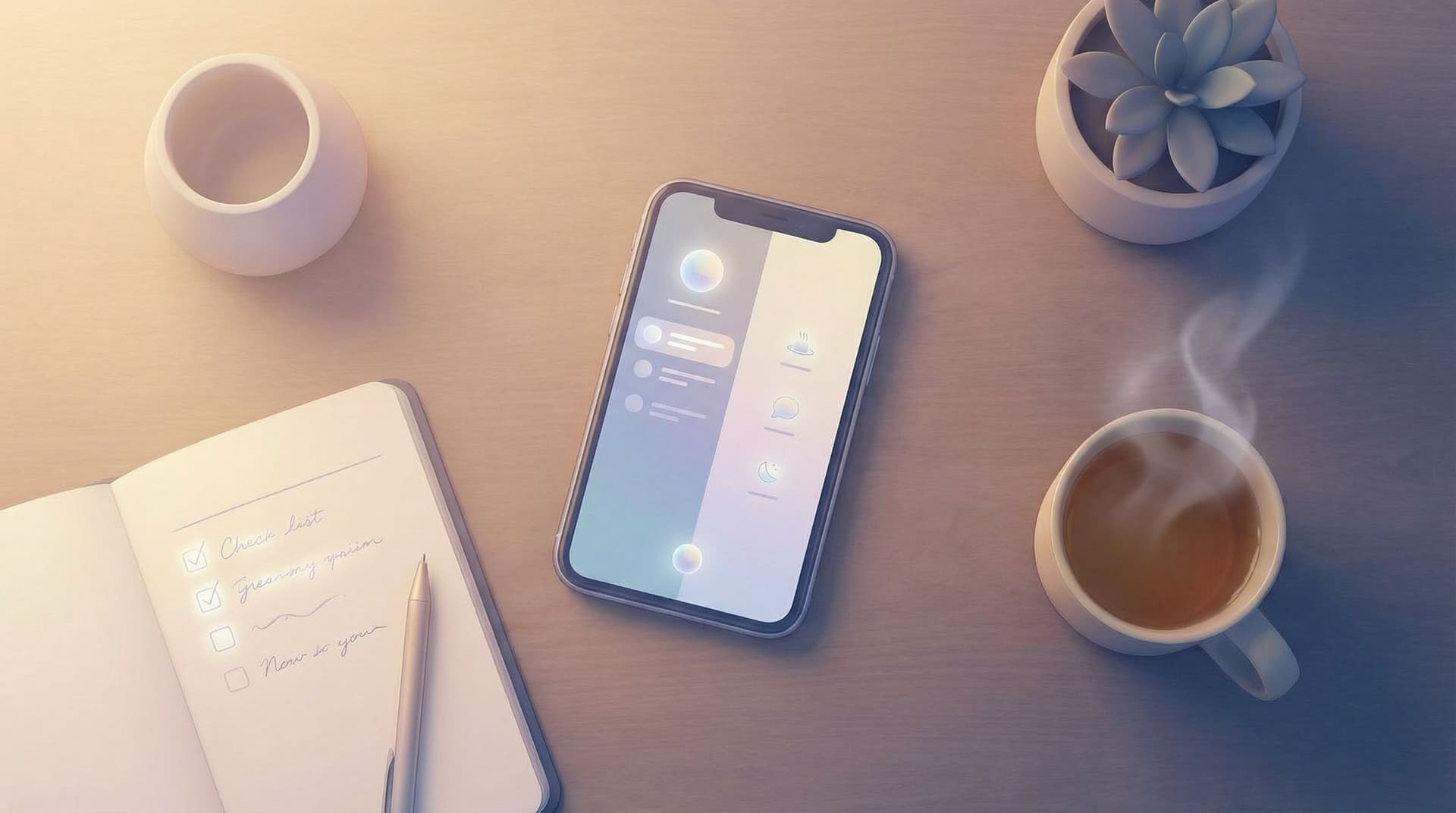
Low-Pressure Planning: Using SelfNote to Hold Ideas, Not Force Rigid Goals


Planning doesn’t have to feel like homework.
For many of us, the moment we turn an idea into a “goal,” the tension shows up:
- Am I really going to follow through?
- What if I fail again?
- Do I have to map out the whole plan right now?
So we do one of two things:
- Avoid planning altogether and hope we’ll “remember it later.”
- Over‑plan with strict timelines, then feel guilty when life doesn’t cooperate.
There’s another way: low-pressure planning.
Low-pressure planning is about letting your ideas land somewhere safe, be held gently, and grow at their own pace—without turning everything into a rigid project plan. An AI‑powered journal like SelfNote is especially good at this, because it’s built to:
- Capture thoughts quickly (text, voice, or WhatsApp)
- Automatically sort them into categories like tasks, reminders, reflections, and dreams
- Surface what matters later with gentle WhatsApp reminders
You don’t have to force yourself into a big goal system. You just need a place that says: “I’ll hold this for you until you’re ready.”
Why Holding Ideas Gently Matters
When every idea becomes a goal, planning gets heavy. That heaviness shows up in a few familiar ways:
- All‑or‑nothing thinking. If you can’t commit to a full plan, you tell yourself it’s not worth capturing the idea at all.
- Pressure to perform. Even personal dreams start to feel like obligations you’re failing.
- Avoidance. You delay writing things down because you don’t want to see another list you might not complete.
Over time, this can lead to:
- Fewer ideas captured
- Less experimentation
- A sense that you’re “bad at planning” or “not disciplined enough”
Low-pressure planning flips this around:
- Ideas are allowed to be incomplete. A half‑sentence is better than nothing.
- Not everything needs a deadline. Some things just need a place to live.
- You can revisit when you have capacity. Your system holds the idea, not your memory.
With SelfNote, this mindset becomes practical. You can send a thought in 10 seconds, let the app categorize it, and walk away without having to decide right now whether it’s a goal, a project, or “just a thought.”
The Core Shift: From “Goals I Must Hit” to “Ideas I’m Holding”
Low-pressure planning rests on one simple shift:
You are not committing to do everything you capture. You’re committing to remember what mattered to you.
That shift creates room for:
- Curiosity instead of pressure. “What might this become?” instead of “How will I finish this?”
- Seasons. Some ideas are for this month. Some are for next year. Some are just for fun.
- Honesty. You can admit, “I’m interested in this, but I’m not ready to act yet.”
If you’ve read about creating a kinder task list, you’ll recognize this idea from A Kinder To‑Do List: Letting SelfNote Separate Gentle Reminders from True Tasks. Low-pressure planning builds on that same kindness, but zooms out to your whole life: projects, someday ideas, creative sparks, and personal growth.
Step 1: Give Every Idea a Soft Landing
The first part of low-pressure planning is simple: don’t let ideas live only in your head.
Any time something tugs at you—big or small—give it a soft landing.
Examples:
- “Maybe learn Italian someday.”
- “Ask therapist about feeling stuck with work.”
- “Long weekend trip alone in the fall?”
- “Business idea: tiny workshop on boundaries for freelancers.”
With SelfNote, that might look like:
- Typing a quick sentence in the app
- Sending a WhatsApp message like: “Idea: pottery class with Emma next season”
- Recording a 30‑second voice note while you walk, then letting SelfNote transcribe and categorize it
You don’t have to:
- Decide the exact date
- Estimate the budget
- Break it into steps
You only have to say: This matters enough to save.
If you’d like more ideas on capturing loose thoughts without pressure, you might enjoy A Calm Capture System: Using SelfNote to Gently Sweep Up Loose Thoughts All Day Long.

Step 2: Let AI Do the Sorting, So You Don’t Have To
One reason planning feels heavy is the mental sorting:
- Is this a real task?
- Is this just a wish?
- Is this something I need to remember later?
SelfNote is designed to quietly handle this in the background. When you send a note, it automatically classifies it into categories like:
- Tasks – things that clearly need action
- Reminders – gentle nudges for later
- Dreams / Someday – ideas, wishes, long‑term possibilities
- Reflections – thoughts, feelings, realizations
This gives you what we might call soft structure: enough organization to find things later, without needing to design a complicated system. If that idea resonates, you can go deeper with Soft Structure, Strong Support: Lightly Organizing Your Life with SelfNote’s Smart Categories.
The benefit is simple:
- You can capture freely without deciding where everything goes.
- Later, when you do feel like planning, you can review just your dreams, or just your reminders, or just your tasks.
No pressure. Just a gentle, AI‑assisted sorting process in the background.
Step 3: Create a “Someday Shelf” Instead of a “Someday Guilt Pile”
A lot of stress comes from ideas that sit in a vague “someday” bucket—sticky notes, screenshots, half‑written lists. You know they’re there, but you don’t know what to do with them.
Low-pressure planning invites you to turn that into a Someday Shelf inside SelfNote: a calm place where ideas can rest until you’re ready to look at them.
Here’s a simple way to do it:
- Capture all your “maybe someday” ideas into SelfNote over a week or two.
- Trips you might want to take
- Skills you might want to learn
- Side projects that feel interesting but not urgent
- Let SelfNote classify them as dreams, ideas, or reminders.
- Optionally add a tiny label in your wording like “Someday:” or “Maybe:” when you send the note. (Example: “Someday: take a ceramics class.”)
- Once a month, review your Someday Shelf. Ask gentle questions:
- Does this still feel alive to me?
- Is there a tiny next step I want to take?
- Or do I just want to keep this as a possibility for later?
You’re not forcing yourself to act. You’re simply:
- Letting ideas exist without pressure
- Giving yourself periodic chances to reconnect with them
- Allowing some to fade if they no longer fit your life
If you want to see how those “maybe someday” ideas can gently turn into simple steps—only when you’re ready—you might like From Passing Thoughts to Gentle Plans: Letting SelfNote Turn “Maybe Someday” Ideas into Simple Next Steps.
Step 4: Use Gentle Reminders, Not Rigid Deadlines
Deadlines can be useful. They can also be harsh.
Low-pressure planning favors gentle reminders over strict due dates—especially for personal ideas, growth, and creativity.
With SelfNote, you can:
- Ask it (in WhatsApp or the app) to remind you about an idea later
- “Remind me in a month about: weekend retreat idea with Maya.”
- “In two weeks, remind me to re‑read my notes about changing jobs.”
- Let SelfNote send WhatsApp reminders for things you’ve marked as important
- Space out reminders so they feel like check‑ins, not alarms
Some simple patterns that keep pressure low:
- “Check back in” reminders. Instead of “Finish the outline by March 1,” try “Check back in on the workshop idea in early March.”
- Seasonal reviews. At the start of a new season, ask SelfNote to surface dreams or ideas tagged (or described) with that season. Example: “In May, remind me of all notes mentioning ‘summer project.’”
- Curiosity prompts. When a reminder appears, ask yourself:
- Does this still feel interesting?
- Is there a tiny, 5‑minute step I want to take?
- Or do I simply want to push this forward again?
This way, reminders become invitations, not verdicts.

Step 5: Let Your Plans Be Conversation, Not Commandments
Traditional planning often feels like carving something in stone. Once it’s written, you feel locked in.
Low-pressure planning treats your notes and ideas as part of an ongoing conversation with yourself. SelfNote makes this easier because you can literally talk to it—just like chatting with a friend.
Some ways to lean into that:
- Ask questions in your notes.
- “Do I actually want to run a half‑marathon, or do I like the idea of feeling stronger?”
- “What would a tiny version of this project look like?”
- Reply to your own earlier notes.
- When SelfNote reminds you of an idea, send a follow‑up message: “Update: this still feels exciting, but I’m going to wait until after tax season.”
- Use voice notes when you’re unsure.
- Talk through what you’re thinking, let SelfNote transcribe and organize, then revisit later with clearer eyes.
Over time, this creates a quiet archive of your evolving thoughts, not just a stack of abandoned plans. You can scroll back and see:
- How your interests shifted
- Which ideas kept returning
- What you actually cared enough to move forward
That’s planning as self‑understanding, not self‑judgment.
Step 6: Keep the Bar for “Success” Very Low
Low-pressure planning only works if you’re kind to yourself.
Here are a few gentle rules you can borrow:
- Capturing is success. If you wrote it down or recorded it, you’ve already done something valuable.
- Revisiting is a bonus, not a requirement. Some weeks you’ll review your ideas; some weeks you won’t. The system is still working because it’s holding things for you.
- Not acting is allowed. You are allowed to look at an idea, feel that it’s not right for you anymore, and let it go.
- Tiny steps count.
- Saving one link about a new topic
- Asking one friend for a recommendation
- Setting one gentle reminder for next month
All of that is real progress.
If you’d like more support in building habits that feel this light, you might enjoy Gentle Routines, Not Rigid Systems: Building a Low‑Friction Note‑Taking Habit with SelfNote.
A Simple Low-Pressure Planning Routine You Can Try This Week
Here’s a small, realistic way to start using SelfNote as your low‑pressure planning partner.
Daily (1–3 minutes):
- Whenever a thought appears—an idea, a wish, a “maybe someday”—send it to SelfNote.
- Text, WhatsApp, or a quick voice note all work.
- Don’t add details. Don’t create a plan. Just capture.
Once a week (5–10 minutes):
- Open SelfNote and filter or skim through your recent notes.
- Notice:
- Which ideas still feel alive
- Which ones already feel complete just by being written down
- For the 1–3 ideas that feel most important right now:
- Add a gentle reminder (e.g., “Remind me in 2 weeks to think about this again.”)
- If it feels easy, write one tiny next step. If not, leave it.
That’s it. No master plan. No big, structured review. Just:
- Catch what appears
- Check in occasionally
- Let your system hold the rest
Over time, you’ll notice a difference:
- Less fear of “losing” ideas
- Less guilt about not doing everything
- More trust that the right ideas will resurface when you’re ready
Bringing It All Together
Low-pressure planning is not about doing less with your life. It’s about removing the friction and fear that keep you from even starting.
When you use SelfNote as a soft place for your ideas, you:
- Capture more of what matters
- Let AI gently organize it into tasks, reminders, reflections, and dreams
- Use WhatsApp reminders as kind check‑ins, not harsh alarms
- Allow ideas to grow in seasons, not on demand
- Build a quiet, searchable memory of what you’ve cared about over time
Your plans stop being rigid promises and start becoming living conversations.
Summary
- Planning doesn’t have to be rigid. You can hold ideas gently without turning everything into a strict goal.
- SelfNote is built for low-pressure planning. It lets you quickly capture thoughts, auto‑categorizes them, and sends gentle WhatsApp reminders.
- A Someday Shelf beats a guilt pile. Let your “maybe” ideas live somewhere calm and revisitable.
- Gentle reminders > hard deadlines. Use check‑ins and curiosity instead of pressure and perfectionism.
- Tiny routines are enough. A few captured ideas a day and a short weekly skim can meaningfully change how you feel about planning.
Your Next Gentle Step
You don’t need a big system change or a perfect plan.
You just need one place where your ideas can land without pressure.
If that sounds helpful, let SelfNote be that place. Try this:
- Sometime today, when a thought or “maybe someday” idea appears, send it to SelfNote instead of trying to hold it in your head.
- That single action is enough to begin.
From there, you can add more—weekly check‑ins, gentle reminders, small next steps—only when you’re ready.
Your ideas deserve to be held kindly. You do, too.