Soft Routines for Busy Brains: Designing a Low-Friction Capture Flow with SelfNote

Some minds are always “on.”
You remember a bill while you’re in the shower. You think of a great idea while you’re walking into a meeting. You recall something important just as you’re falling asleep.
These moments are tiny, but the accumulation of them is heavy. When every thought depends on your memory alone, your brain turns into a crowded waiting room: tasks, worries, ideas, and memories all standing around, hoping you don’t forget them.
A soft routine can change that—especially when it’s built around a low-friction capture flow.
Instead of trying to “be more disciplined” or build a strict journaling habit, you create something smaller and kinder: a few easy ways for thoughts to leave your head and land somewhere safe, all day long.
That’s where SelfNote can quietly support you.
Why Soft Routines Work Better for Busy Brains
A lot of advice around habits and productivity assumes you have steady energy and consistent focus. Many people don’t.
If you’re juggling work, caregiving, health, or a brain that runs a little differently, strict routines can feel like this:
- All or nothing – If you miss a day, it feels like you’ve “failed.”
- High effort – You need time, quiet, and motivation to do it “properly.”
- Guilt-heavy – The routine becomes one more thing you’re not keeping up with.
Soft routines take the pressure down. They’re built on a few simple ideas:
- Tiny is enough. A sentence, a quick voice note, or a single reminder still counts.
- Inconsistent is normal. Some days you’ll capture a lot; some days you’ll barely touch it.
- Support over self-criticism. The system adapts to your energy, not the other way around.
With SelfNote, this softness is built in. You can:
- Send a quick WhatsApp message instead of opening a special app.
- Speak a voice note instead of typing when you’re tired.
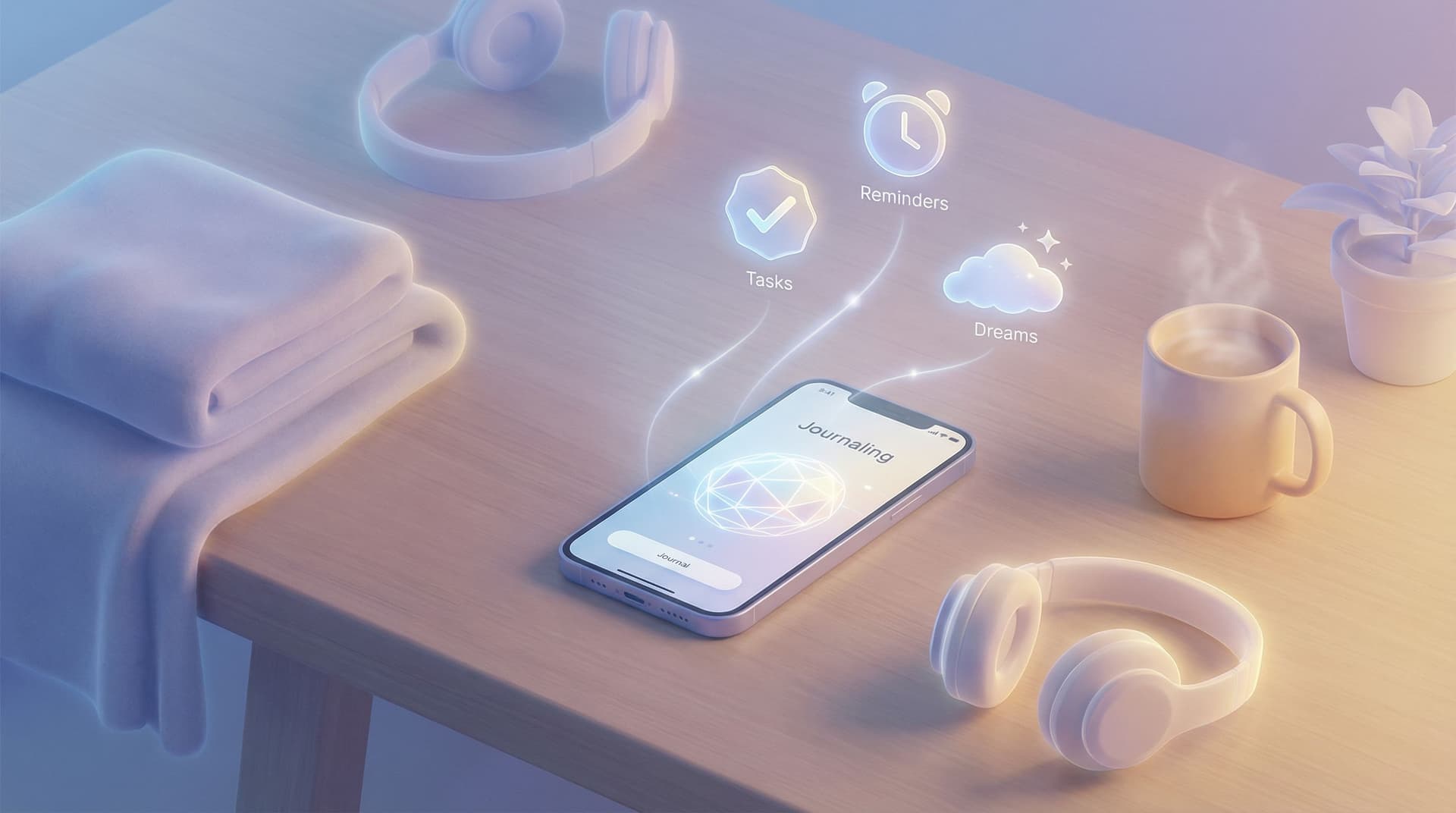
- Let the AI auto-categorize notes into tasks, reminders, dreams, reflections, and more—so you don’t have to build a complex structure.
If this resonates with you, you might also like how we explore low-pressure habits in Journaling for Neurodivergent Brains: Low-Pressure Capture and Reminders with SelfNote.
What Is a Low-Friction Capture Flow?
Think of a capture flow as the path a thought takes from your mind into a trusted place.
A low-friction capture flow:
- Takes seconds, not minutes. You can use it while walking, in line, or between tasks.
- Uses tools you already touch daily. Like WhatsApp, your phone’s mic, or a simple text box.
- Doesn’t require sorting right away. You capture first; SelfNote can organize later.
Instead of:
“I’ll sit down tonight and write everything out.”
…it becomes:
“When something pops up, I drop it into SelfNote in the quickest way available.”
Over time, this gentle flow turns scattered thoughts into:
- Searchable reminders
- Light to-do lists
- Calm reflections
- A growing personal record of your days
You don’t have to force a big journaling habit. You just need a few soft entry points.
Step 1: Choose Your Easiest Capture Channels
Start by asking a simple question:
“Where is my attention already going?”
You don’t need a brand-new habit. You want to piggyback on what you already do.
Here are three gentle options you can mix and match with SelfNote:
1. WhatsApp: For People Who Live in Chats
If you’re already on WhatsApp all day, this can become your quiet side-channel.
You can:
- Create a chat with SelfNote and treat it like a private inbox.
- Forward messages, photos, or voice notes you don’t want to lose.
- Type a quick line like: “Reminder: ask Dr. Lee about knee pain next visit.”
This works especially well if you liked the ideas in WhatsApp as Your Quiet Journal: Simple Ways to Turn Everyday Chats into a Private Reflection Space.
2. Voice Notes: For Tired Hands and Busy Days
On days when typing feels like too much, speaking is often easier.
With SelfNote, you can:
- Record a 20–40 second voice note about your day.
- Talk through a worry or decision while you walk.
- Capture a creative idea before it fades.
The app can transcribe and categorize what you say, turning your spoken thoughts into searchable notes without extra effort.
3. Quick Text Notes: For Tiny Thoughts
Sometimes you just need a single line:
- “Pay electricity bill Friday.”
- “Idea: newsletter about gentle productivity.”
- “Nice moment: coffee with Sam, felt really grounded.”
Sending these straight into SelfNote gives them a home right away, instead of relying on memory or scattered apps.
Choose 1–2 of these channels to start. That’s enough for a soft routine.

Step 2: Decide What You Want to Capture (Soft Categories)
You don’t need a perfect taxonomy. But having a few soft categories in mind makes it easier to know, “Oh, this belongs in SelfNote.”
Here are gentle buckets many people find helpful:
-
Don’t-forget tasks
- Pay, book, send, reply, schedule, renew.
- Example: “Email HR about benefits before Thursday.”
-
Soft reminders
- Things you want to remember but don’t need to act on immediately.
- Example: “Ask Mom about that story from her childhood.”
-
Ideas and sparks
- Half-formed ideas, projects, or creative thoughts.
- Example: “Maybe start a Sunday walk club with neighbors.”
-
Emotional check-ins
- How you’re feeling, what’s weighing on you, what you’re grateful for.
- Example: “Feeling overwhelmed by work; need to ask for help on project X.”
-
Memories and small moments
- Tiny things you don’t want to forget.
- Example: “Kid said ‘I’m proud of you, Mom’ today. Want to remember this.”
The good news: you don’t have to tag any of this manually. When you send a note to SelfNote, it automatically sorts it into categories like reminders, tasks, reflections, and more.
If you like this idea of light structure, you might enjoy Soft Structure, Strong Support: Lightly Organizing Your Life with SelfNote’s Smart Categories.
Step 3: Design a “Soft Sequence” for Your Day
A soft routine isn’t a rigid schedule. It’s more like a gentle rhythm: a few moments in the day when you’re likely to capture something.
You can think in terms of triggers, not times.
Morning: When You First Reach for Your Phone
Instead of scrolling right away, try this:
- Open WhatsApp or the SelfNote interface.
- Answer one simple question:
- “What’s quietly on my mind this morning?”
- Type or speak for 30–60 seconds.
This could be:
- A worry you woke up with
- One thing you’re hoping for today
- A reminder you really don’t want to forget
If you’re curious about gentle morning check-ins, Quiet Mornings with Your Mind: Using SelfNote Prompts for Calm Reflection Instead of Scrolling goes deeper into this.
During the Day: When a Thought Interrupts You
Use interruptions as cues to capture, not to spiral.
When you’re:
- In a meeting and remember a personal task
- With family and think of a work idea
- On a walk and a worry pops up
Try this micro-flow:
- Open your chat with SelfNote.
- Drop a quick note: text or voice.
- Return to what you were doing.
You’re not solving the thought; you’re parking it somewhere safe. If this idea of “parking” distractions appeals to you, you might like Soft Boundaries, Clear Focus: Using SelfNote to Park Distractions While You Stay in the Moment.
Evening: When Your Brain Starts Replaying the Day
At night, many people experience a “brain replay”: worries, what-ifs, and half-finished thoughts.
Instead of keeping them all in your head, you can:
- Send a short voice note to SelfNote:
- “Here are three things I’m still thinking about from today…”
- Mention any tasks you don’t want to forget tomorrow.
- Name one thing you’re grateful for or proud of.
This doesn’t have to be every night. Even a couple of evenings a week can make your mind feel lighter.

Step 4: Let SelfNote Do the Heavy Lifting
A common reason people avoid “systems” is that they don’t want to maintain them. That’s fair.
With SelfNote, the goal is for the system to do most of the work.
Here’s what happens behind the scenes when you send a note:
- Automatic categorization – Your note is sorted into buckets like tasks, reminders, dreams, reflections, ideas.
- Searchable memory – You can later search for “doctor,” “vacation,” or “Sam” and quickly find what you captured.
- Gentle reminders – You can let SelfNote send you WhatsApp reminders for things you truly don’t want to forget.
This means your capture flow can stay incredibly simple. Your only job is:
When something matters enough that you don’t want to forget it, send it to SelfNote.
Everything else—structure, retrieval, timing—can be handled softly in the background.
Step 5: Keep It Kind, Especially on Hard Days
Some days, you’ll send lots of notes. Other days, you’ll send none. That’s not a sign the system is broken; it’s a sign you’re human.
Here are a few ways to keep your capture flow gentle:
- No streaks, no shame. You don’t “break” anything by missing a day or a week.
- Lower the bar on tough days. On exhausted days, one 10-second voice note is more than enough. If that’s all you do, your system is still working.
- Let it be messy. Notes don’t have to be polished. They can be fragments, half-sentences, or rambly voice notes.
- Trust that small adds up. A single line today might be exactly what you’re grateful to find three months from now.
If you often feel too tired for any kind of system, When You’re Too Tired for Systems: Tiny Ways to Use SelfNote on Your Most Exhausted Days offers very gentle, realistic ideas.
A Simple Example: One Day with a Soft Capture Flow
Here’s what a low-friction day might look like with SelfNote:
-
7:45 a.m. – Before checking anything else, you send a WhatsApp message:
“Woke up anxious about presentation. Remember to ask Jess for feedback on the slides.” -
11:10 a.m. – Walking back from a meeting, you record a 30-second voice note:
“Idea: maybe create a short guide for new clients instead of long emails.” -
3:25 p.m. – While texting a friend, you remember a bill. You quickly type to SelfNote:
“Pay water bill by Monday.” -
9:40 p.m. – Lying in bed, your mind starts replaying the day. You whisper a short note:
“Still worried I talked too much in the meeting. Also proud I actually shared my idea.”
Behind the scenes, SelfNote:
- Sorts “pay water bill” into a task and can remind you on time.
- Files the client guide idea under ideas/notes.
- Keeps your emotional reflections together so you can see patterns over time.
Your part took maybe 3–4 minutes total, spread across the whole day.
Why This Matters: The Quiet Benefits of Soft Capture
When you have a low-friction capture flow, a few important shifts tend to happen:
- Your brain feels less crowded. You’re not relying on memory for everything.
- Important things stop falling through the cracks. Tasks and reminders have somewhere to live.
- You see your own patterns more clearly. Over time, reflections reveal what drains you, what helps, and what you care about.
- You build a gentle record of your life. Not as a perfect journal, but as real fragments of what mattered in each season.
It’s not about being perfectly organized. It’s about feeling a little more held.
Bringing It All Together
To design a soft routine and low-friction capture flow with SelfNote, you can:
- Pick your easiest channels – WhatsApp, voice notes, or quick text.
- Keep a few soft categories in mind – tasks, reminders, ideas, feelings, moments.
- Anchor capture to natural triggers – waking up, interruptions, bedtime.
- Let SelfNote handle the structure – categories, search, and reminders.
- Stay kind to yourself – no streaks, no perfection, just small, honest notes.
Over weeks and months, these tiny captures add up to something steady: a calm, searchable, supportive space that remembers with you.
Your Gentle First Step
You don’t need to design the perfect system before you start.
If you’d like to try this, you can:
- Open SelfNote and set up your WhatsApp connection or preferred capture method.
- Send one note today:
- A task you don’t want to forget,
- A worry that’s been looping,
- Or a small moment you’d like to remember.
That’s it. One note is enough to begin.
From there, you can let your soft routine grow at its own pace—supporting your busy brain with a kinder, lighter way to hold your life.